From Haussmannian facades festooned with multicolored polka dots to dim rooms lined with infinite mirrors, the Japanese artist Yayoi Kusama has left her psychedelic imprint on the Parisian urban landscape. A towering figure in contemporary art and a pioneer of both the avant-garde and pop, the sculptor has passed away, leaving behind a visually instantly recognizable universe. Obsessive and immersive, her work rests on the infinite repetition of circular motifs — the famed polka dots — and on soft sculptures and optical games designed to distort the viewer’s sense of space and time.

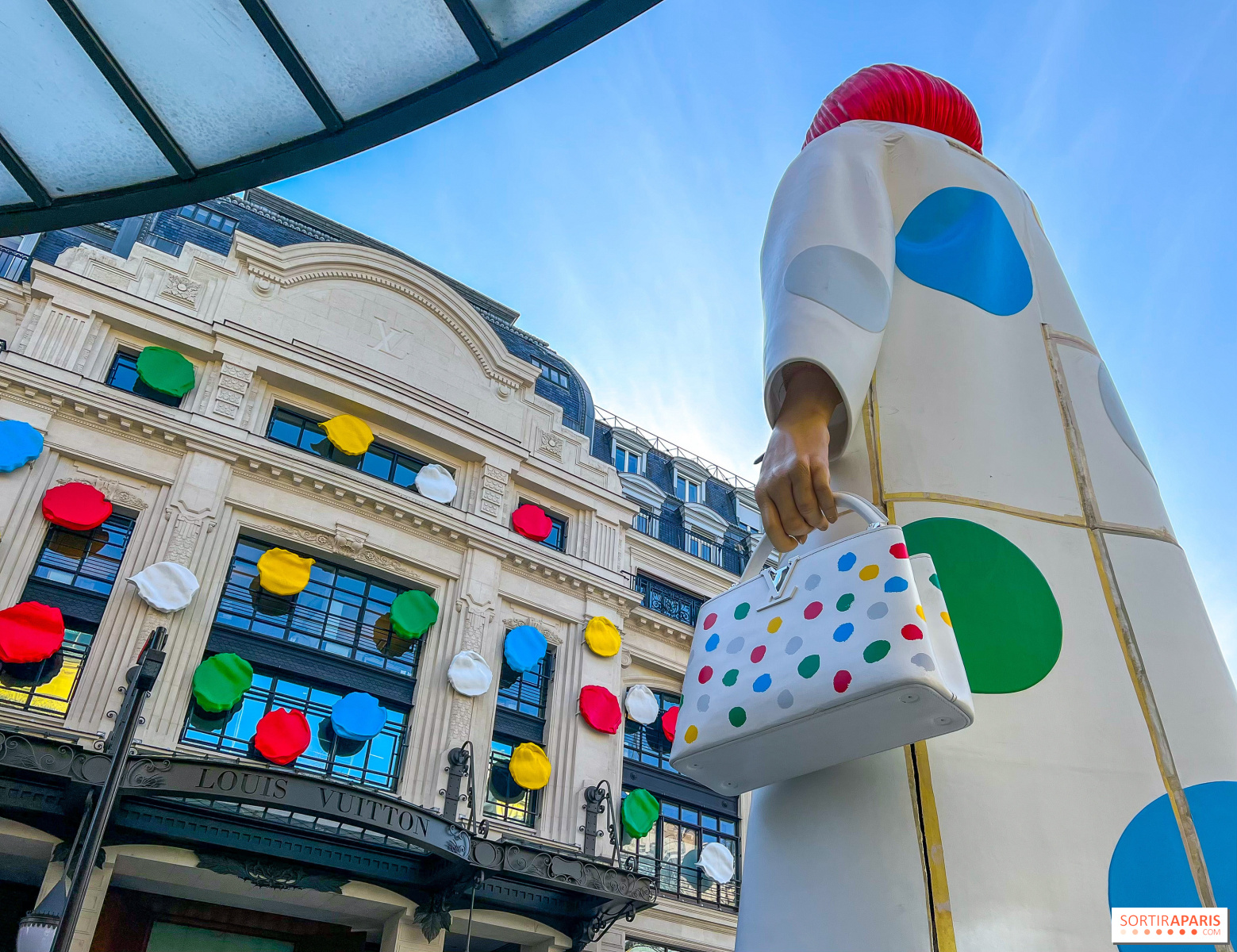
In 2023, the capital took on the air of an open-air gallery during the collaboration between the artist and the Louis Vuitton house. A giant, several-meters-tall replica of Yayoi Kusama seemed to paint the façade of the historic Champs-Élysées boutique with its own hands. A few kilometers away, opposite the Pont Neuf and the Samaritaine, another monumental sculpture dominated the banks of the Seine. These urban sightings drew long queues of curious locals and contemporary-art enthusiasts eager to capture these unusual installations at the heart of the 8th and 1st arrondissements.
Remember: back in October 2019, during FIAC Hors les Murs, passers-by and fans of Parisian strolls were stunned to discover a massive inflatable yellow pumpkin speckled with black, set up opposite the jewelers on the prestigious Place Vendôme (1st arrondissement). Titled "Life of the Pumpkin Recites, All About the Biggest Love for the People," this ten-meter-tall sculpture celebrated one of the artist's signature motifs. For Kusama, the pumpkin — which she tended as a child with her family in Japan — symbolized a warm, generous, and humorous form, creating a joyful, poetic contrast with the Place Vendôme's classical architectural rigor.

Long before the current wave of Kusama shows on Paris’s grand boulevards, the city celebrated her genius as early as 2011 with a major retrospective at the Centre Pompidou. Visitors flocked to step inside her iconic Infinity Mirror Rooms, those enclosed spaces where mirrors and LED lanterns conjure an endlessly sprawling cosmos. According to workshop anecdotes, the artist reportedly designed these rooms to materialize her own childhood hallucinatory visions, aiming to dissolve her body into the vastness of the universe — a concept she called auto-oblitération.
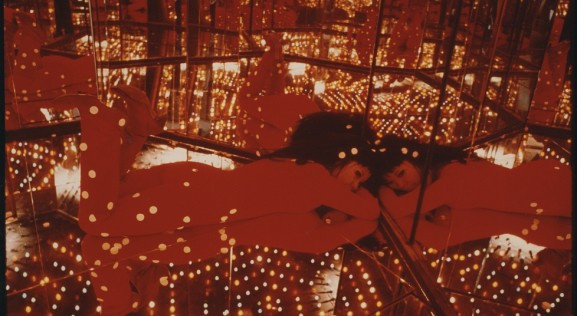
Among the most memorable memories of visitors to the Bois de Boulogne is none other than the famous installation Infinity Mirror Room - Phalli's Field (Floor Show), drawn from the Louis Vuitton Foundation collection. As people stepped into this mirror-lined chamber, they literally felt as if they were diving into an unusual immersive pool: the floor was entirely studded with hundreds of soft white fabric protuberances speckled with bright red polka dots. Thanks to the infinite reflections on the walls, these organic forms—resembling mushrooms or corals—seemed to stretch outward like a boundless, peppery sea, delivering an unforgettable immersive sensory experience.
What most defines Kusama's language is a compulsive accumulation. Born in Matsumoto in 1929, the artist quickly established herself at the crossroads of Pop Art, conceptual art and minimalism. She often recalled that her earliest polka-dot motifs and endless nets germinated in childhood during intense hallucinations where the flowers of the family home seemed to cover the walls, the ceiling and even her own body. She theorized this approach under the name of “auto-obliteration,” inviting the viewer to melt their individuality into the cosmos.
This page may contain AI-assisted elements, more information here.