Covid-19 is back in the spotlight in France at the end of September 2026. According to the latest bulletin from Santé publique France, the consultations SOS Médecins for suspected Covid have surged by 76 % en une semaine, from September 14 to 20. In Paris and across the Île-de-France, from the inner suburbs to the outer departments, the indicators are also climbing.
This rebound comes three weeks ahead of the start of the vaccination campaign against Covid and the flu, slated for October 13, 2026. Doctors are therefore urging vigilance, particularly for at-risk individuals.
In the field, the trend is already visible. In a clinic in Clamart, in the Hauts-de-Seine department (92), a franceinfo report shows that about one in five patients arrives with the same signs: fever, headaches, and severe fatigue. General practitioner Yongping Ding acknowledges it: COVID-19 and the flu look so alike that a test is often needed to tell them apart.
No need to panic, though. Levels are similar, or even lower, than in previous years at the same point in the season. But the virus is making a comeback, much like the fallen leaves that always end up carpeting the paths of the Jardin du Luxembourg at the same time of year.
At this point, it's hard to predict the scale of this wave. That said, you can get a sense of where the Covid-19 is circulating in France. The interactive map below, published by actu.fr using data from Santé publique France, helps identify the hardest-hit departments. Just hover or tap your department to see the figures.
If the map isn’t displaying, you can view it here.
In general practice, the Sentinelles network estimates Covid incidence at about 9 cases per 100,000 people, a level that has stayed steady from one week to the next. The uptick is therefore mainly visible at SOS Médecins, in emergency departments, and in wastewater data.
In Île-de-France, the signal is clear. According to Santé publique France’s latest regional epidemiological update, the virus concentration in Île-de-France’s wastewater has reached a level not seen since October 2024.
In Île-de-France, the national SUM'Eau program relies on seven wastewater treatment plants that serve Paris and both the inner and outer suburbs. From September 14 to 20, 2026, emergency-room visits for suspected Covid-19 rose across all age groups in the region, reaching levels comparable to the same period in 2024 and 2025.
| Period | What Public Health France is observing |
|---|---|
| Week 35 (Aug 24–30) | Emergency department visits are rising across all age groups, but totals remain small and below 2025 levels. Wastewater shows a slight uptick, with variation by site. |
| Week 36 (Aug 31–Sep 6) | Confirmed increases in emergency visits, especially among those under 15 and adults 15–64. SOS Médecins activity is rising, mainly in the 15–64 group, approaching 2025 levels and well below 2024. |
| Week 38 (Sep 14–20) | Virus detectable in wastewater at a level not seen since October 2024. Emergency visits up across all age groups, at levels close to those in 2024 and 2025. |
Sources: Santé publique France’s Île-de-France regional bulletin, dated 16 September 2026, and the epidemiological briefing dated 23 September 2026. The full regional bulletins are available on the Île-de-France page of Santé publique France and on its data portal, Odissé.
A quick Île-de-France aside: it’s in Yvelines, in Achères, where the Seine Aval wastewater plant of SIAAP sits—the largest treatment facility in Europe, able to process up to 1.5 million cubic metres of wastewater a day. Yet it isn’t among the seven sites chosen for Covid surveillance.
Why monitor wastewater? Because the virus is shed, in part, through stools. The upticks detected at wastewater treatment plants typically precede those seen in patients, and they don’t depend on how many tests are conducted.
If the chart doesn’t display, you can view it by clicking here.
The most recent bulletin comes from the OSCOUR network and was published on September 23, 2026, covering week 38 (September 14–20). It draws on data from 700 emergency departments, representing about 98% of all visits in France. Here’s what it shows for the Covid-19.
| Indicator | Variation | That is | Compared with previous years |
|---|---|---|---|
| SOS Médecins consultations, all ages | +76 % | +390 consultations | Lower |
| Emergency department visits, adults | +67 % | +204 visits | Lower |
| Emergency department visits, children | +16 % | +25 visits | Lower |
Source: OSCOUR bulletin from Santé publique France and SOS Médecins bulletin dated September 23, 2026.
The uptick didn’t start yesterday. Week after week, the indicators have been climbing since the new school year began, a bit like a line slowly lengthening outside a bakery on a Sunday morning.
| Week | SOS Médecins | Emergencies |
|---|---|---|
| Week 36 (Aug 31 to Sep 6) | Upward trend | +50% across all ages (+116 visits) |
| Week 37 (Sep 7 to 13) | +97% among children, +62% among adults | +19% among children, +34% among adults |
| Week 38 (Sep 14 to 20) | +76% across all ages (+390 visits) | +16% among children, +67% among adults |
Sources: OSCOUR bulletin of September 8, 2026, week-37 data relayed by Ma Santé, and the OSCOUR bulletin of September 23, 2026.
To keep a cool head, a point of reference helps. By mid-September 2025, SOS Médecins had recorded a 66% increase, but with 646 additional interventions in a week, compared with 390 this year. The pace of growth is similar, but the overall volume remains lower.
Covid isn’t the only guest at the emergency rooms. The same week, Santé publique France reported a jump in visits for bronchiolitis among children under one year (+74%) and for flu or flu-like illness (+32%), the latter slightly higher than in past years. On the hospital side, admissions after ER visits remain broadly stable across ages (+0.5%), with a marked rise among those under 2 years (+10%). The next bulletin, due Wednesday 30 September 2026, will indicate whether the curve keeps climbing.
For epidemiologist Antoine Flahault, interviewed by actu.fr, this is clearly a new epidemic wave. He notes, however, that the population remains broadly well protected against severe cases and expects a wave similar to the one seen at the end of 2025, which unfolded without major tension.
Unlike the flu, Covid doesn’t follow a strict seasonal pattern. Its numerous mutations help it dodge our immune defenses, which explains why it keeps resurfacing in the news.
Public Health France updated mid-September its page dedicated to the Covid variants. As summarized by CNews, three major family lines are dominating the field: BA.3.2, XFG and NB.1.8.1. These names are mainly familiar to virologists, but they serve as a reminder that the virus is still evolving.
Some groups remain more at risk of complications, hospitalizations and deaths. This includes people aged 65 and older, whose immune defenses weaken with age, those living with chronic conditions, and individuals who are immunocompromised due to illness or treatment. For them, vigilance is essential starting now.
As indicated in the note from the Directorate General of Health, the 2026-2027 vaccination campaign against Covid-19 and the flu will launch jointly on Tuesday, October 13, 2026. It will primarily target people aged 65 and over, those who are vulnerable, and their close contacts.
Important to note: the National Council of the Order of Pharmacists says that anyone who wants a Covid vaccination can receive a free shot, even if they’re not part of the targeted groups. Doctors, pharmacists, nurses and midwives can administer vaccines. The simplest approach is to talk to your doctor or your pharmacist.
The stakes are real. According to Planet, influenza vaccination coverage among seniors stood at just 56.7% in the 2025-2026 season, well short of the 75% goal.
Some health professionals want this. On BFMTV, Pierre-Olivier Variot, president of the Union of Community Pharmacists’ Unions, argued that those who request it should be able to be vaccinated earlier, according to Capital. He notes that more than 12,000 injections were already given last year before the official vaccination campaign kicked off.
Another flashpoint is the supplies. The Federation of French Pharmaceutical Trade Unions fears a syringe shortage by October 13. Since the spring 2026 campaign, Santé publique France no longer distributes syringes and needles for Covid vaccines, and pharmacies must source them on their own. The vaccines themselves remain provided free of charge by the state.
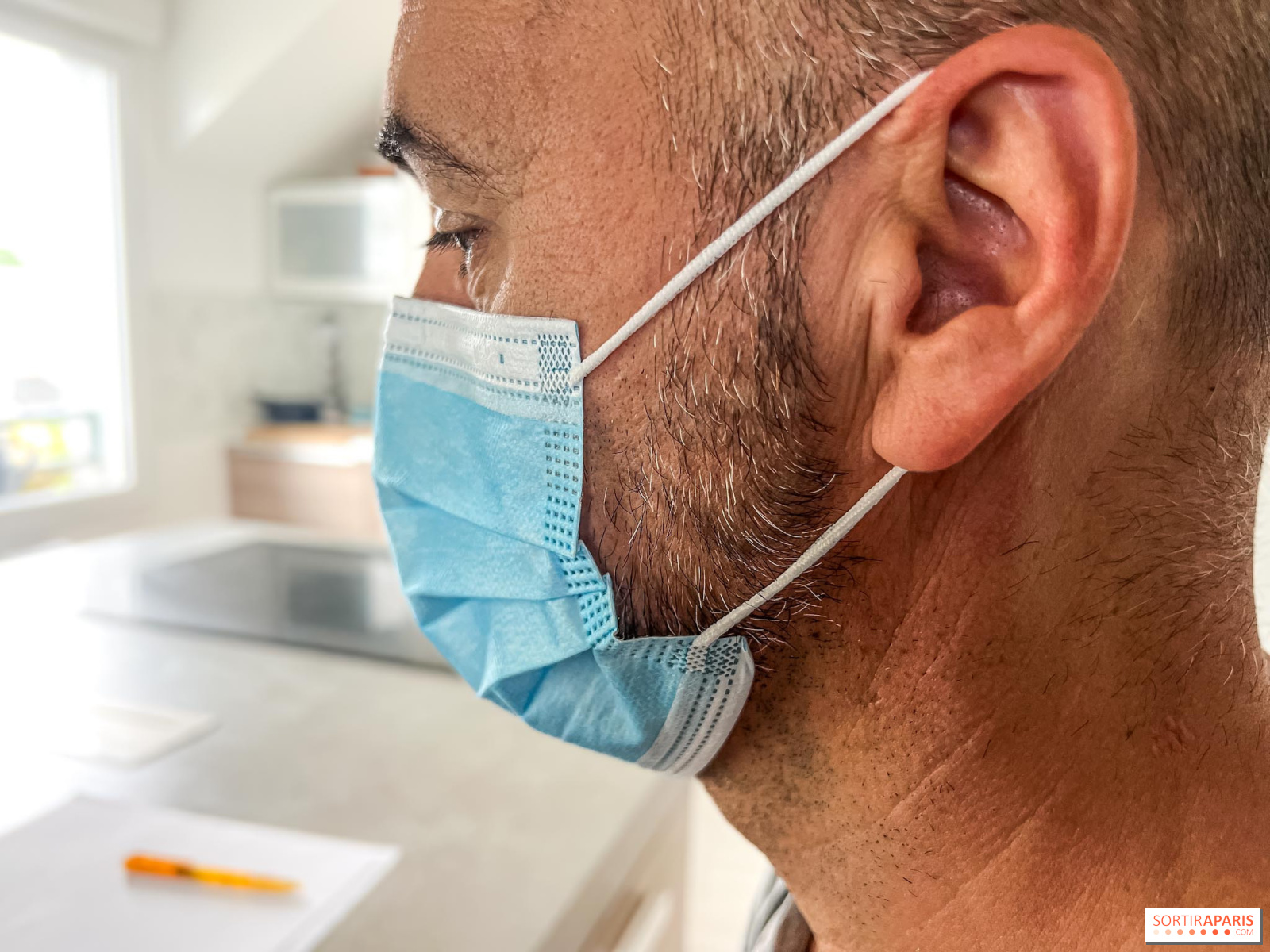
As a reminder, Antoine Flahault urges at-risk individuals to wear an FFP2 mask in enclosed spaces and on public transport. In a crowded metro or RER during peak hours, especially this week, marked by the strike and its disruptions, the advice rings true.
For everyone, barrier gestures remain important: wash your hands regularly, ventilate rooms, wear a mask if you have symptoms to protect those around you, and get tested if you doubt. Official recommendations can be found on the Public Health France website. This article is intended for information purposes and does not replace the advice of a health professional.
The Covid resurgence isn’t a tidal wave for now—more a rising tide we’d do well to anticipate. We’re monitoring the figures and will update this article as the next briefings come in.
This page may contain AI-assisted elements, more information here.