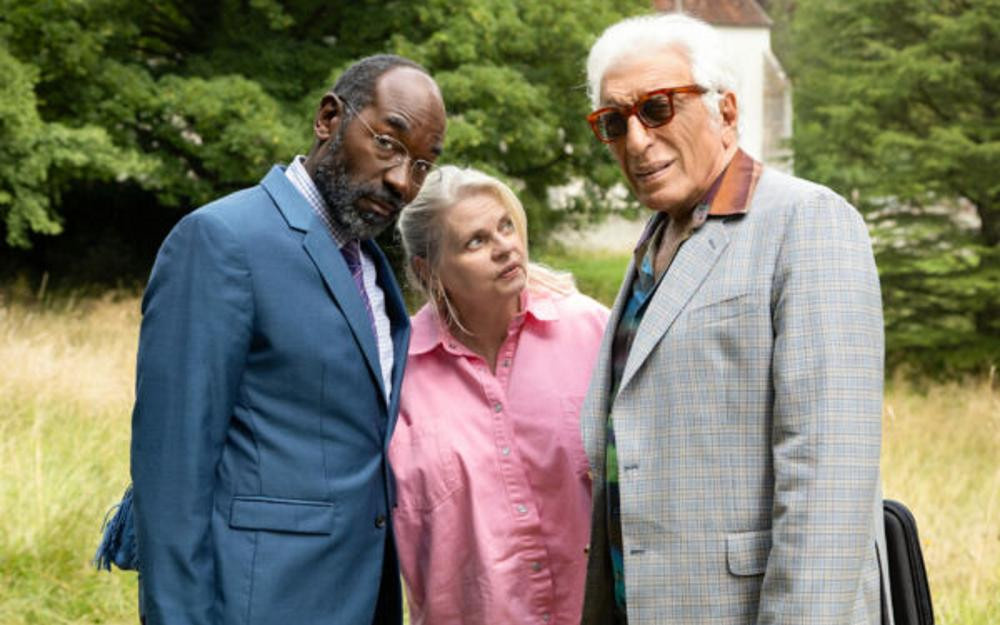
Directed by Lucien Jean-Baptiste (He Already Has Your Eyes, The Second Star), What Do We Do Now? is a social comedy featuring performances by Isabelle Nanty, Gérard Darmon, and Lucien Jean-Baptiste himself. Released in theaters on October 2, 2024, the film explores career transitions after 50, focusing on a trio determined not to be sidelined. The movie will be available for streaming on Netflix starting January 2, 2026, adding to the growing list of contemporary French comedies centered around the theme of second chances.
At 58, Alain, played by Gérard Darmon, faces a sudden job loss. Refusing to accept defeat, he decides to start his own company to prove he's still got something to give. His plan: dive into the childcare industry—an unfamiliar but promising field he believes has potential. He Team up with Véronique, portrayed by Isabelle Nanty, a former coworker struggling with depression, and Jean-Pierre Savarin, played by Lucien Jean-Baptiste, a declining TV game show host.
Together, these three characters are trying to carve out their place in a completely unfamiliar environment, stumbling through a series of awkward moments, shaky plans, and unlikely scenarios. The film delves into their doubts, fears, and bursts of enthusiasm, portraying a trio determined not to be defined by their age or past failures. At the same time, they face the harsh realities of economic and social pressures. Their journey turns into a real-life experiment in “living together,” marked by solidarity, personality clashes, and a reevaluation of their individual paths.
The project was born when TF1 Studio approached Lucien Jean-Baptiste with the idea of adapting Abuelos by Santiago Requeijo, a social comedy focusing on three seniors dreaming of opening a daycare. The filmmaker wanted to steer away from the original ending to explore a broader reflection on living together and the role of those over 50 in today’s workforce. After several years of development and roughly ten screenplay versions co-written with Christophe Duthuron and Méliane Marcaggi, the film evolved into a deeply personal project, rewritten to feature a trio of characters perfectly suited for Gérard Darmon and Isabelle Nanty.
The filming largely took place in the Pays de la Loire region, especially in Vendée, where Lucien Jean-Baptiste has been living since the COVID pandemic. The choice of locations grounds the story in a peri-urban and provincial France, far from the hustle of major cities, emphasizing characters dealing with common economic challenges: layoffs, forced career changes, and the need to acquire multiple skills to stay afloat. The main character, Alain Morin, subtly pays tribute to the "Michel Morin" figures the director has mentioned—everyday jack-of-all-trades workers representing a quiet homage to versatile laborers.
In tone, What Are We Doing Now? aligns with recent French social comedies, reminiscent of films like The Big Step or popular hits such as Les Tuche and What Did We Do to God?. The film favors accessible humor, playing on the contrasts between this middle-aged trio and a sector—childcare—that’s traditionally associated with different types of profiles. Its target audience is viewers looking for feel-good comedies that tackle unemployment, depression, and career changes with a light and optimistic touch, without avoiding a few social jabs.
Our Review of What Do We Do Now? (2024):
What Do We Do Now?, directed by Lucien Jean-Baptiste, is a comedy that tackles a rarely explored topic in cinema: career changes after 50. Led by a talented trio of actors—Isabelle Nanty, Gérard Darmon, and Jean-Baptiste himself—the film strives to blend humor with reflection on second chances. However, it has sparked a divided critical response, with some appreciating its warmth and others criticizing a lack of originality.
Lucien Jean-Baptiste, playing Alain, a man dismissed at fifty who decides to start his own business, captures with authenticity the doubts and enthusiasm of a late-in-life career shift. He’s supported by an energetic Isabelle Nanty, delivering punchy lines with natural spontaneity, especially in her exchanges with Alain’s wife, where she vents her frustrations unapologetically. The film is packed with comedic moments rooted in their interactions, including one memorable line: “Can you shut up? You keep interrupting, and frankly, what you’re saying isn’t interesting.”
Gérard Darmon portrays Jean-Pierre Savarin, a former TV star of the show "Just One Question", now living in the shadow of past fame. His character, both pathetic and charismatic, stands out through a mix of pretension and megalomania. Beneath the humor, these traits reveal a fallen man forced to rely on his father after losing everything he once had.
Cornered, Jean-Pierre agrees to help Alain pivot into influence marketing—a decision laced with irony for a man who, at his peak, must now leverage his fame to promote Alain’s project. Their dynamic creates both humorous and touching moments. Darmon’s natural charisma and talent for playing exuberant characters bring humor by highlighting his character’s contradictions: too proud to accept his decline, yet willing to set aside his ego for friendship.
In many ways, Jean-Pierre becomes a central figure, embodying the film’s core theme: reinventing oneself even when it seems impossible. His journey underscores the importance of adapting in a rapidly changing world, all seasoned with humor and a touch of irony.
On a deeper level, the film delivers a positive message about the power of reinvention, especially at an age when some might feel life’s opportunities are behind them. Its kindness, coupled with accessible humor, enables What Do We Do Now? to connect broadly, particularly with viewers facing similar crossroads in life.
That said, one of the main criticisms is that the film, while charming, feels predictable. The plot is considered clichés-ridden, following familiar beats often seen in comedies about work and life reinventions. Alain’s story, although touching at moments, follows a conventional structure, with obstacles that seem resolved a bit too easily—limiting its dramatic and comedic impact.
Some viewers wished for a deeper exploration of the theme—perhaps more social critique embedded within the comedic misunderstandings, especially regarding the social realities faced by diverse communities. A line from Alain, “Do you know what it’s like to be Black in France? From Martinique, too? Always compared to Franky Vincent,” raises an important issue, but it remains surface-level without further development.
Like most comedies, What Do We Do Now? relies heavily on misunderstandings, skillfully used here to generate humor. Alain’s situation—balancing his entrepreneurial ambitions and family tensions—is ripe for amusing miscommunications, sparked by lively dialogue. These lighter moments are heightened by the strong ensemble cast and Nanty’s sharp-witted exchanges, adding a spicy edge to the film.
Despite that, some critics feel the film relies too much on clichés, in both portrayals of midlife crises and cultural stereotypes. While the goal is entertainment, there’s a sense of disappointment in the lack of narrative risk-taking.
What Do We Do Now? is an enjoyable comedy that, despite its flaws, manages to evoke emotion and smiles thanks to its talented cast and well-crafted dialogues. It promotes an optimistic view of reinventing oneself at any age, offering moments of levity through humorous misunderstandings. Its primary appeal is to those seeking light-hearted entertainment—something warm and uplifting, without necessarily delving deeply into its themes.
What do we do now?
Movie | 2024
In theaters: October 2, 2024
Streaming on Netflix on January 2, 2026
Comedy | Duration: 1h31
Directed by Lucien Jean-Baptiste | Starring Isabelle Nanty, Gérard Darmon, Lucien Jean-Baptiste
Country: France
Combining situational comedy, a portrait of midlife crisis, and social commentary, What Do We Do Now? offers an accessible take on career change at an age when many feel left behind. Anchored by a trio of seasoned actors skilled in mainstream comedy, the film highlights themes of solidarity, humor, and the power to reinvent oneself — now reaching a broader audience through its release on Netflix.
To explore further, check out our January Netflix new releases, our comprehensive guide to latest streaming titles across all platforms, and today's pick with what to watch today in streaming.
This page may contain AI-assisted elements, more information here.